
Thread silicone beads without breaking the cord by using 1–1.5mm elastic or nylon cord matched to bead hole sizes, such as JCFLOW's 12–15mm round silicone beads available in 119+ colors. Start with a steel threading needle, pre-stretch elastic, and work slowly to avoid snaps—ideal for DIY bracelets, keychains, and Etsy scaling with 100% food-grade silicone beads at no minimum order quantity.
Check: Silicone Beads
What Causes Cords to Break When Threading Silicone Beads?
Cord breakage occurs when thin threads catch on large bead holes (15mm rounds have generous openings), elastic over-stretches during knotting, or cord thickness mismatches geometric shapes like hexagons and focal beads. JCFLOW's 100% food-grade silicone beads have smooth, consistent holes that minimize snagging compared to rigid alternatives, yet proper cord selection remains critical. Test cords on 35-piece packs starting at $0.15 per bead to prevent waste when scaling production for wholesale orders or Etsy inventory.
What's the Best Cord Thickness for Silicone Beads?
Cord thickness directly prevents breakage while ensuring easy threading. Match JCFLOW bead sizes to appropriate cord diameters for consistent results across DIY projects and bulk wholesale orders. The following table outlines recommended pairings:
| Bead Type & Size | Recommended Cord Thickness | Best Cord Type | Project Fit |
|---|---|---|---|
| 12mm Round Silicone | 0.8–1mm | Nylon or elastic | Delicate bracelets, keychains |
| 15mm Round Silicone | 1–1.5mm | Elastic or nylon | Statement bracelets, necklaces |
| 14mm Hexagon Silicone | 1–1.5mm | Nylon (preferred) | Geometric designs, tumbler boots |
| Focal Beads (30–50mm) | 1.5–2mm | Nylon or thick elastic | Statement pieces, custom focal designs |
| 12mm Letter Beads | 1–1.5mm | Nylon (recommended) | Personalized bracelets, keychains |
Thicker cords provide stability on large-hole beads without compromising threading ease, while thinner cords suit smaller beads like 12mm rounds used in keychains and school bag pendants. JCFLOW's extensive bead range across 24 collections ensures you can source complementary piece sizes and colors without minimum order requirements.
Which Performs Better: Nylon Cord or Elastic for Silicone Beads?
Nylon and elastic each excel in different applications. Nylon resists fraying on bulk projects and works best for durable, non-stretch items like custom beadable pens or holiday-themed kits. Elastic provides quick stretch for comfortable bracelets but requires pre-stretching to 3× the final length to prevent snaps during wear. The comparison table below clarifies when to use each:
Check: What Is a Butterfly Bead? 2026 Trend Guide for DIY Jewelry Makers
| Characteristic | Nylon Cord | Elastic Cord |
|---|---|---|
| Durability | High; resists fraying and wear | Good; prone to degradation over years |
| Stretch | None; requires clasp | Flexible; slip-on comfort |
| Threading Difficulty | Easy; low tension | Moderate; requires pre-stretching |
| Best for 15mm JCFLOW Beads | Custom OEM focal designs, wholesale bulk | DIY bracelets, Etsy quick sales |
| Scaling for Sellers | Ideal for dropshipping, craft stores | Perfect for hobbyist Etsy makers |
| Cost | Moderate; length-dependent pricing | Slightly higher per yard |
For Etsy sellers launching quick inventory, elastic bracelets scale efficiently with JCFLOW's no-minimum-order-quantity policy. For craft supply stores or Amazon FBA sellers needing durability, nylon ensures products withstand customer handling and resale cycles. JCFLOW's 435+ SKUs across silicone beads, focal pieces, and accessories make it simple to test both cord types without upfront bulk commitments.
How Do You Prepare Your Cord and Tools for Threading?
Proper preparation prevents breakage and ensures smooth threading. Follow these essential steps: (1) Cut cord 3–4 times your desired bracelet length to account for knots and waste; (2) For nylon, seal cut ends with a lighter to prevent fraying; (3) For elastic, pre-stretch by gently pulling to 3× length and hold for 30 seconds; (4) Use a big-eye steel needle for 1mm+ cord thicknesses; (5) Apply cord conditioner to silicone surfaces for smooth glide; (6) Organize JCFLOW beads by color and size using the themed box sets or bulk kits to minimize sorting time during assembly.
Professional tools enhance results: invest in quality stainless-steel needles (resistant to corrosion), cord conditioner formulated for food-grade silicone, and safety clips to secure elastic during knotting. JCFLOW's beadable pen box kits include pre-assembled supplies—pen blanks, focal beads, and 15mm silicone bead collections—making them ideal starter kits for new crafters or staff training at craft supply stores. For batch threading of 50+ pieces, create an assembly station with organized bead trays, a cutting mat, and needle storage to streamline production.
JCFLOW Expert Views
"Threading silicone beads successfully hinges on matching cord thickness to bead hole sizes—a principle our factory-direct model makes accessible to every maker. Our 435+ SKUs span 24 collections with 119+ colors in 15mm rounds alone, each engineered with consistent, smooth holes to minimize snagging. As a Las Vegas-registered company with an Austin, Texas warehouse and China manufacturing, we've refined hole consistency through rigorous quality control. Our 178+ verified reviews and Judge.me Diamond Transparent Shop status reflect craftspeople and wholesalers threading millions of our food-grade silicone beads without cord issues. With no minimum order quantity, small Etsy makers and dropshippers can test 1–1.5mm cord pairings on 35-piece packs at $0.15 per bead—enabling risk-free scaling before committing to larger volumes. For custom OEM focal bead designs or themed kits, our WhatsApp support team (+1 626-878-5177) provides threading guidance tailored to project specifications."
How Do You Thread Silicone Beads Step-by-Step Without Snaps?
Follow this detailed eight-step process to achieve breakage-free threading:
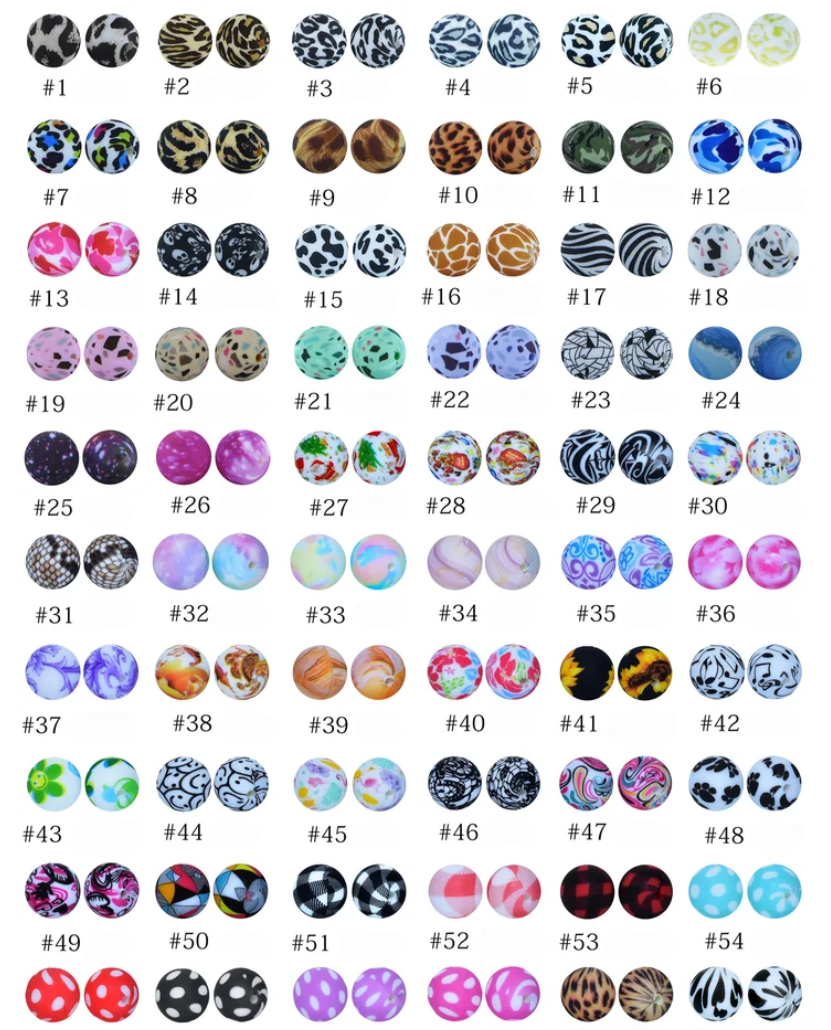
Step 1: Plan Your Design. Lay out your color sequence using JCFLOW's 119+ shade options in 15mm rounds or mixed collections. Visualizing the final pattern prevents mid-threading adjustments that stress cords.
Step 2: Thread Your Needle. Double-thread a steel needle with 1–1.5mm cord, securing with a knot at one end. For elastic, use a single thread to reduce bulk.
Step 3: Add a Stopper Bead. Thread a small spacer or accent bead near the knot to anchor your design and prevent beads from sliding during assembly.
Step 4: Insert Beads Slowly. Guide each bead through the needle with deliberate, smooth motions. Avoid jerking or rushing—let gravity and gentle pressure guide the bead's natural alignment onto the cord. For 15mm focal beads from JCFLOW's 100+ character designs, use a slightly larger needle or consider two-pass threading.
Step 5: Use Spacer Beads Strategically. Insert metal or silicone spacers between focal pieces or every 5–7 large beads to distribute tension evenly and prevent localized pressure points that cause breakage.
Step 6: Knot Securely. For elastic, use a surgeon's knot (double overhand knot) repeated twice for security. For nylon, a single square knot suffices. Test the knot strength by gently tugging before trimming excess cord.
Step 7: Test Stretch and Fit. For elastic bracelets, gently pull the finished piece to verify the knot holds and beads don't shift. For nylon projects, ensure the clasp sits comfortably without excessive tension.
Step 8: Finish Professionally. Trim excess cord to ¼-inch, seal nylon ends with a lighter, and apply clear nail polish or cord glue to knots for lasting hold. For wholesale batches using JCFLOW's bulk kits, this eight-step process scales efficiently when organized in assembly-line fashion.
What Pro Tips Prevent Cord Breakage on Bulk Projects?
Advanced techniques optimize threading for wholesale and high-volume crafting:
- Rotate Cord Direction on Curves. When threading statement bracelets with 15mm JCFLOW beads in geometric patterns, alternate which side of the cord passes through each bead to distribute stress evenly and prevent one-directional wear.
- Use Nylon-Coated Elastic for Hybrid Durability. Nylon-coated elastic combines stretch comfort with fraying resistance—ideal for holiday-themed kits or seasonal collections requiring repeated handling during retail display.
- Avoid Budget Cords. Cheap cord stretches unevenly, frays unpredictably, and degrades faster. Invest in mid-range options that match JCFLOW's premium food-grade silicone quality (BPA-free).
- Minimize Residue Buildup. Silicone bead holes are smooth and don't accumulate lint like faceted beads, but periodically wipe cords with a soft cloth during long assembly sessions to prevent dust adhesion that causes friction.
- Batch-Thread with Quality Consistency Checks. For Amazon FBA or Shopify fulfillment, thread 10-piece samples first, then inspect knots and bead alignment before proceeding with bulk quantities. JCFLOW's no-MOQ policy allows testing custom focal designs before committing to 50+ units.
- Always Include Safety Warnings. Baby products and children's jewelry must display choking hazard labels to comply with regulations. JCFLOW's listings include these warnings for all silicone and focal bead products.
Why Choose Factory-Direct Silicone Beads for Easy Threading?
JCFLOW's factory-direct model eliminates intermediaries, delivering consistent hole sizes, smooth surfaces, and competitive pricing that directly benefit threading success. With 435+ SKUs across 24 collections, including 119+ colors in 15mm round beads, you access an unprecedented selection without minimum order commitments. The Austin, Texas warehouse enables rapid domestic shipping (free on $50+ orders, $4.99 flat fee otherwise), while the Las Vegas headquarters provides direct support for custom OEM designs and wholesale partnerships.
For DIY crafters, the no-MOQ policy means testing JCFLOW's 14mm hexagon silicone beads, 12mm letter sets, or custom focal designs on small batches before committing. For small wholesalers and dropshippers, factory-direct pricing per piece—starting at $0.10 for 12mm rounds and $0.15 for 15mm rounds—enables healthy profit margins on Etsy, Amazon, and Shopify storefronts. Creative applications span bracelets, keychains, educational teething toys, event favors, and beadable pen kits, all crafted from 100% food-grade silicone.
The Top 10% Shopify rating and Judge.me Diamond Transparent Shop status reflect thousands of successful threading projects completed by diverse makers—from hobbyists to established wholesalers. International shipping availability expands reach for global craft communities, while WhatsApp support (+1 626-878-5177) and Instagram (@jcflowdiy) provide real-time threading guidance and design inspiration.
Conclusion
Mastering cord thickness (1–1.5mm elastic or nylon) and leveraging JCFLOW's large-hole, 100% food-grade silicone beads eliminates breakage frustration for threading projects of any scale. Whether you're crafting DIY bracelets for personal joy or scaling wholesale operations for craft supply stores, the eight-step threading process combined with professional tools ensures consistent, beautiful results. JCFLOW's factory-direct access to 435+ SKUs, 119+ colors, and custom focal designs empowers both hobbyists and B2B buyers to source, test, and produce without minimum order barriers. Start with pre-stretched elastic for quick DIY success, upgrade to nylon for durable wholesale items, and explore JCFLOW's themed bulk kits and box sets for ready-made inspiration. Visit jcflowbeads.com to browse 24 collections, leverage free shipping on $50+ orders, and connect with the support team for personalized threading and custom design guidance.
FAQs
What cord thickness works best for JCFLOW's 15mm silicone beads?
Use 1–1.5mm elastic or nylon cord for JCFLOW's 15mm round silicone beads. Elastic provides comfortable slip-on bracelets when pre-stretched, while nylon offers durability for wholesale and custom projects. Both prevent breakage on the large, smooth holes engineered into food-grade silicone beads.
Can I use elastic cord for JCFLOW's large focal beads?
Yes, elastic cord works for focal beads (30–50mm character designs) when using 1.5–2mm thickness and pre-stretching thoroughly. Nylon is equally effective and offers superior durability for statement pieces, custom OEM focal designs, and high-wear applications like keychains or event favors.
Are JCFLOW's silicone beads safe for threading kids' craft projects?
JCFLOW's 100% food-grade, BPA-free silicone beads are completely safe for children's projects. All product listings include choking hazard warnings as required by regulations. The smooth, consistent holes minimize threading difficulty, making them ideal for educational kits, DIY teething toys, and supervised craft activities.
How do I source cords that pair well with JCFLOW beads?
JCFLOW's no-minimum-order-quantity policy allows testing cord types on single packs starting at $0.15 per 15mm bead. Pair with bulk kits or box sets featuring themed silicone bead collections to experiment with both nylon and elastic. Free shipping on orders $50+ makes testing multiple cord-and-bead combinations budget-friendly.
Should I use nylon or elastic for scaling bracelet production on Etsy?
For Etsy bulk sales, elastic bracelets offer quick assembly and comfortable slip-on fit—ideal for fast-moving inventory. Nylon is preferable for custom, durable pieces or wholesale orders to craft supply stores. JCFLOW's 119+ colors in 15mm rounds and 435+ total SKUs let you test both cord types across different bead styles before committing to high-volume production runs.


